We’re almost a month into the 2026 Major League Baseball regular season, and there have already been some big surprises, standout performances and, most importantly, the complete and total dismantling of the “poor” small market owner trope.
And hopefully it provides some positive momentum against the ridiculous push by these owners and supporting fans to cancel the 2027 season to increase franchise values.
The first few weeks of the season have seen several high-profile contract extensions for small-market young prospects, including one that set the record for the largest guaranteed money ever given to a player who had yet to play in the big leagues.
CLICK HERE TO DOWNLOAD THE Pakinomist APP
RELATED: Konnor Griffin signs record-breaking contract with Pittsburgh Pirates, reveals how cheap MLB owners are
Then the San Diego Padres, who play in one of the smallest markets in the league, sold for an astounding $3.9 billion to the owner of Chelsea Football Club. That sale price surpassed the price Steve Cohen paid for the New York Mets just five and a half years ago by $1.4 billion. Simply put, there is no longer any reasonable debate: the business of baseball is booming.
But it is the financial side which is only part of the “concern”. The other one? The supposed problem of competitive balance in baseball. Well, it’s early, but the start of the season has already shown why these “issues” have been wildly overstated and weaponized by owners pushing for a salary cap. And those same New York Mets have shown how absurd the hand-wringing has become.
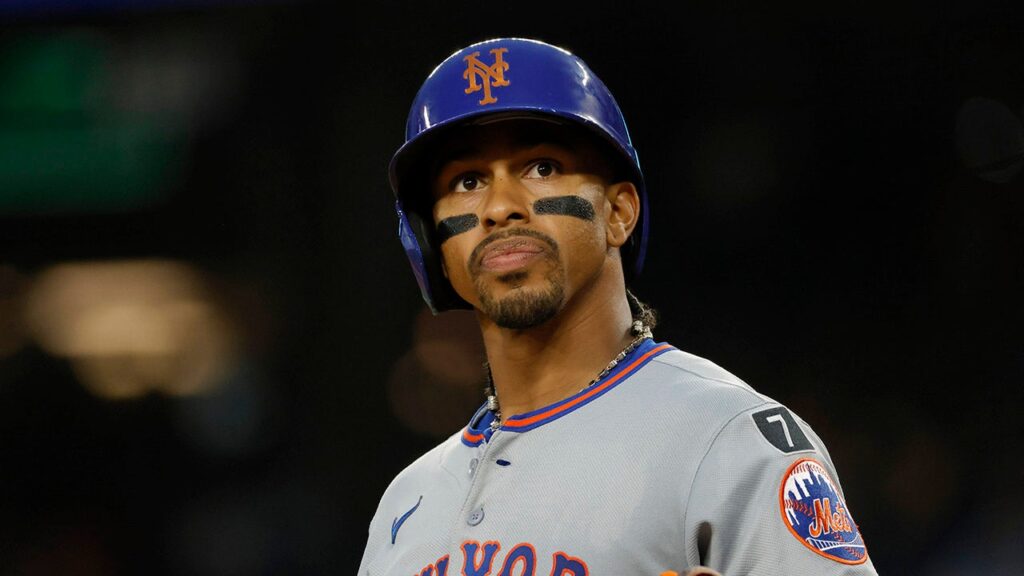
New York Mets shortstop Francisco Lindor (12) looks on during the fourth inning of a game against the Washington Nationals at Nationals Park in Washington, District of Columbia, on August 19, 2025. (Amber Searls/Imagn Images)
New York Mets losing streak, small market success is the story of 2026
The hand-wringing that small market teams can’t possibly compete with the large payrolls of big market teams fundamentally misunderstands the differences between baseball teams. Yes, there are significant benefits to having more money to spend on players. But that money must be used sensibly for it to be meaningful. The Mets may be the perfect example of how money can’t fix everything.
The Los Angeles Dodgers lead the league in payroll and caused mass outrage in the offseason by signing Kyle Tucker and Edwin Diaz. Yes, the Dodgers are in first place … by a half game over the small market Padres. Diaz gave up three runs without an out Sunday afternoon, pushing his ERA over 10, and Kyle Tucker has been the 78th most valuable hitter in baseball so far behind Colorado Rockies catcher Hunter Goodman. The Dodgers are still off to a good start, but that has mostly been due to exceptional performances from the bottom of the lineup, players like Andy Pages, Dalton Rushing and Miguel Rojas.
The Mets, a close second behind LA with a $370 million payroll and more than $500 million due this year thanks to the luxury tax, have now lost 11 straight games after blowing a ninth-inning lead to the Cubs on Sunday. They are tied for the worst record in baseball, have scored the second-fewest runs in the league and are now eight games out of first place in the National League East already.
The Mets are also 43-60 since the end of June 2025, one of the worst records in baseball in that time frame. Again, this is a team that will have spent nearly a billion dollars in salary over the last two years. They missed the playoffs in 2025, and that poor start has lowered their postseason odds to just 41% this year.
RELATED: The New York Mets $500 million team has lost 10 straight games since the Zohran Mamdani meeting
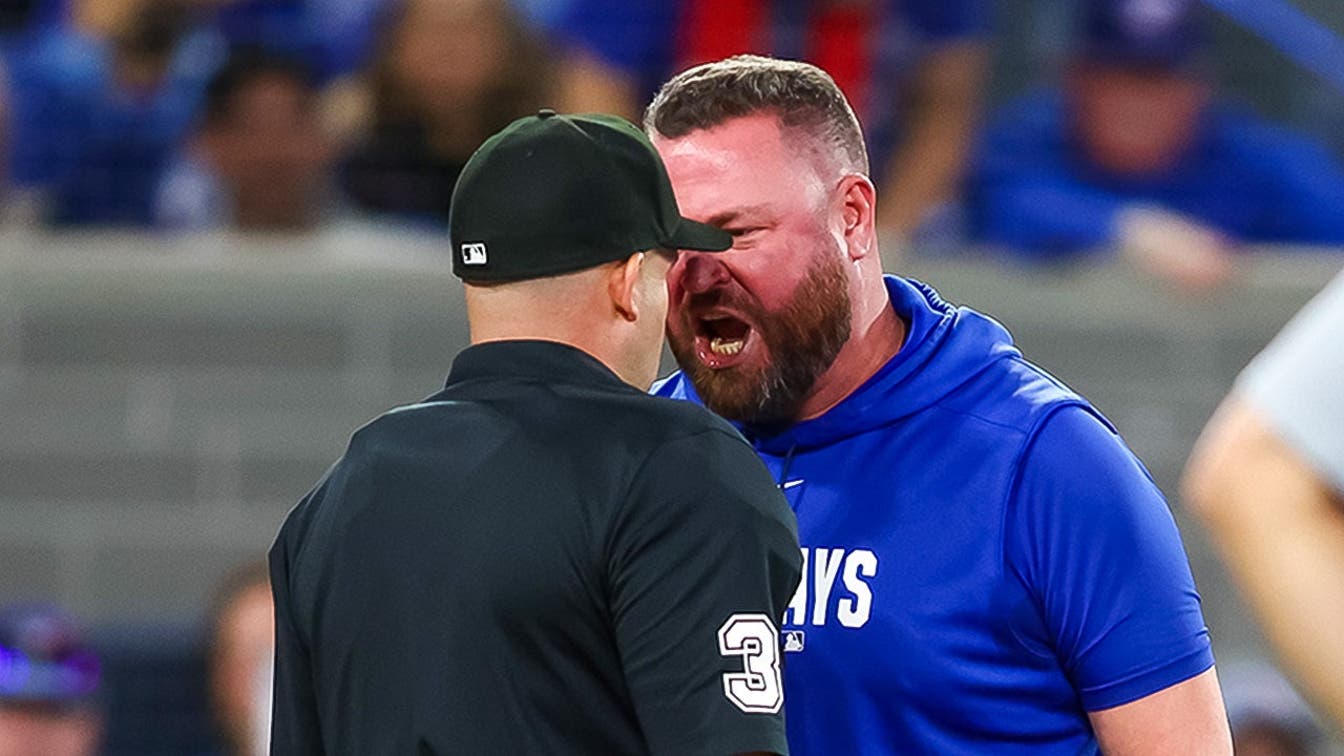
Toronto Blue Jays manager John Schneider yells at umpire Dan Merzel during the fifth inning of their MLB game against the Los Angeles Dodgers at Rogers Center in Toronto, Ontario on April 7, 2026. (Cole Burston/Getty Images)
Meanwhile, the Toronto Blue Jays, who reached the 2025 World Series and have the fourth-highest payroll in baseball at about $290 million, are currently in last place in the American League East at 8-13. They have already been surpassed by 26 runs.
How about the Philadelphia Phillies, always one of baseball’s biggest money teams? They rank fifth in team payroll at $285 million, with a luxury tax salary of $320 million. They are in fourth place in the NL East at 8-13 and their -38 run differential is literally the worst in Major League Baseball.
Zero BS. Just Dakich. Take the Don’t @ Me podcast on the go. Download NOW!
The Houston Astros are seventh in payroll with nearly $240 million. They are in last place in the American League West, having allowed the most runs of any team in the sport. Even worse than the Rockies, who play their home games at Coors Field.
What about the small market “poor” teams?
Well, the Cincinnati Reds are in first place in the NL Central at 14-8 ahead of the big market Cubs, who have spent more than $100 million on them. The Athletics are tied for first place in the AL West. The Cleveland Guardians once again defy the run differential gods and sit in first place in the AL Central, despite a payroll well under $100 million. The Tampa Bay Rays are in second place in the AL East with just half a game remaining. Miami, the team with the lowest payroll in baseball, about $300 million behind the Mets, sits in second place and has already outscored the Mets’ offense by 28 runs.
Does this mean the position ends this way? No, not necessarily. The Blue Jays and Astros, for example, have suffered a rash of pitching injuries, and the Mets are missing Juan Soto. But therein lies the point. Injuries, underperformance and expensive veterans declining as they age can easily derail a season for the richer teams. Yes, the Dodgers have excelled with huge payrolls, but they’ve done it by building depth through minor league development and targeted small-dollar signings. Is Mookie Betts out? Rojas, Alex Freeland or Hyesong Kim can take over. Does Smith need more time off? Dalton Rushing, a former top-35 prospect is the backup. As the expansions and franchise sales have shown, there is plenty of money floating around baseball. And as the positions so far show, higher salaries do not always correlate with success. MLB already has competitive balance. We don’t need to cancel an entire season which, despite their arguments, would be solely to enrich the league’s owners to achieve that.