
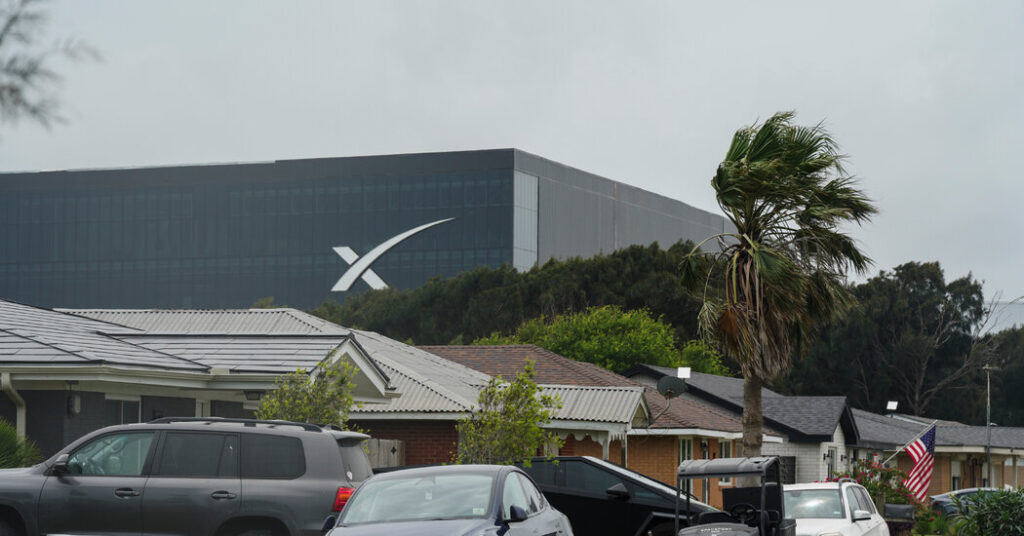
SpaceX, Elon Musk’s rocket ship company, plans to sell shares publicly for the first time ever this week. It is an unusual event in several ways.
The company’s initial public offering would give it the title of the world’s largest initial public offering SpaceX is also giving everyday investors a much larger portion of its shares than is typical for a public offering. And the IPO could create the world’s first trillionaire by increasing the net worth of the company’s CEO, Mr. Musk.
Here’s what you need to know ahead of SpaceX’s first day of trading on Friday.
What is an IPO?
An IPO, or IPO, is a company’s debut on the stock market. This is the first time the public can buy a part of the company. Companies do this to tap into a larger pool of capital to help them expand their business.
When a company decides to go public, it works with an investment bank to find out how much the company is worth and the price at which to sell its shares.
SpaceX has set its price at $135 per per share, which would value the company at $1.77 trillion. Since last week, SpaceX’s bankers have been discussing with potential investors how many shares they are willing to buy at that price. On Thursday evening, all orders for shares will be final and the tender process will be closed.
On Friday, the shares begin trading on the Nasdaq. After trading begins, the share price is likely to fluctuate as shares change hands on the open market. Bankers generally try to price an IPO so that it has room to rise once its shares are public. Some analysts question how much more the value of SpaceX can rise given its already high valuation.
Why does the SpaceX IPO matter?
Hundreds of companies introduce their shares to the market every year. But what makes SpaceX stand out is its size.
At a $1.77 trillion valuation, it would dethrone Saudi Aramco — Saudi Arabia’s state-owned oil company, which debuted in 2019 with a $1.7 trillion valuation — as the largest IPO ever.
“It’s a big deal because it’s literally a big deal,” said Matt Kennedy, senior strategist at Renaissance Capital.
If SpaceX’s IPO flops, it could send a shudder through a market that has been riding a wave of optimism related to artificial intelligence and other technology. The results could include a cooled IPO market or a broader market selloff.
“If SpaceX does poorly and the rest of the market goes down with it, we’ll all point to that as a sign that the market peaked,” Mr. Kennedy.
Still, it’s possible investors will stick with the company for reasons beyond the “Elon Musk factor” or AI-related exposure, he added.
Who makes money from the IPO?
The immediate beneficiaries of the IPO are those who already own private shares in SpaceX. They include Mr. Musk, who owns a majority of the company’s stock and could see his net worth rise to over $1 trillion.
Others include SpaceX employees who have been compensated in company stock and investors, including venture capital funds. The banks helping SpaceX go public will also make money, earning a fee of more than $500 million, the largest payout ever.
The banks are also using the IPO as an opportunity to woo clients of their wealth management businesses, giving them access to SpaceX’s initial public offering shares.
If shares of the company pop, investors who buy on Thursday night can sell those shares and make a profit.
In the long term, SpaceX’s stock performance may depend on whether Mr. Musk can deliver on his promises to put tens of thousands of new satellites into orbit and develop a viable AI model.
How can I buy SpaceX stock?
It is possible for ordinary investors to buy shares in the company at its price of $135, although not guaranteed.
When companies go public, they usually reserve a small portion of their shares for individuals, with the bulk going to giant investors such as asset managers and hedge funds.
However, SpaceX is seeking commitments from individuals for up to 30 percent of its shares, much larger than a typical offering.
Some of these shares earmarked for individual investors will be available under the SPCX ticker on online brokerage platforms such as Robinhood, Fidelity, Charles Schwab and SoFi.
For anyone looking to buy SpaceX stock, brokers have said investors may not get the total they’re requesting given a limited offering of shares at the initial offering price.
“Here you’re asking for 1,000 shares — maybe you’ll get 300; maybe you’ll get 50,” said Jay Ritter, an IPO expert at the University of Florida.
Individuals may find themselves owning SpaceX stock even if they did not actively choose to invest.
The Nasdaq-100, a popular index that tracks the top 100 non-financial companies listed on that exchange, recently relaxed its rules to make it easier and faster for SpaceX to be included. That will force funds that track the index to invest in SpaceX virtually overnight.
How much can investors earn from the IPO?
Almost 16 years ago, investors came upon the IPO of Mr. Musk’s electric car company, Tesla, which proved lucrative for those who stuck around. Someone who bought $1,000 of Tesla stock in 2010 would have seen their value rise to about $400,000 today.
SpaceX is the largest company in the aerospace industry by a wide margin, making it a crucial stock to own for those interested in that sector. It has also been around for over two decades and has hosted several rounds of funding since then.
“The time to be an early investor in SpaceX is kind of over,” Mr. Kennedy of Renaissance Capital.


