
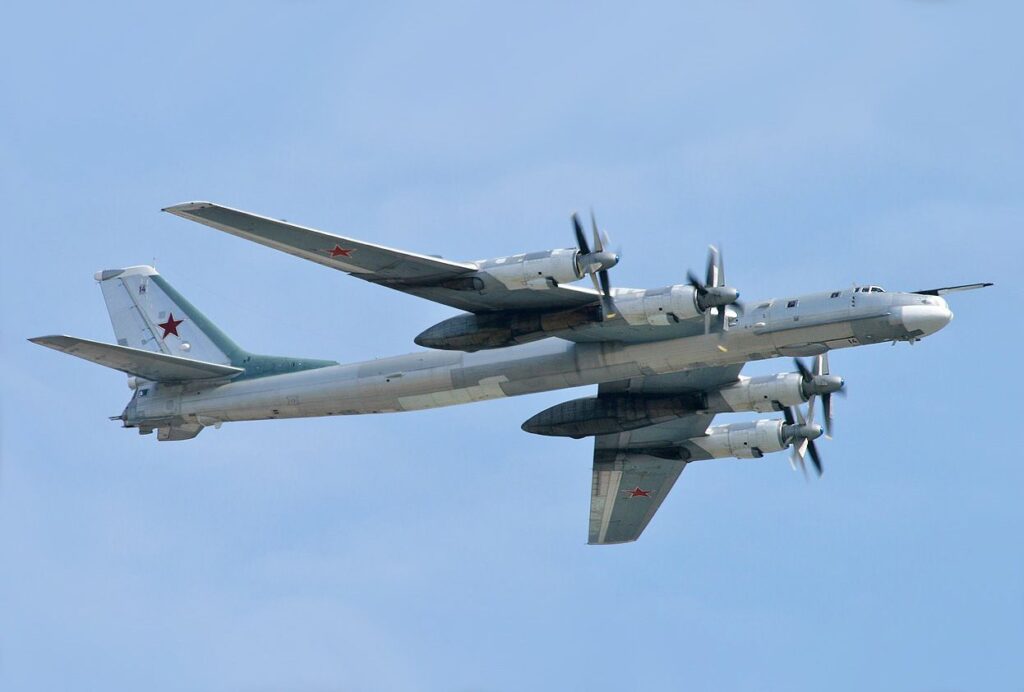
- Satellite images independently confirm that a Russian Tu-95MS strategic bomber was destroyed in Ukraine SBU drone strike on Engels-2 airbase
- The Tu-95 is essentially an irreplaceable Cold War asset with only 60 in service and at least 10 photo-confirmed losses since the Russia-Ukraine conflict began in 2022
- The loss is devastating for Russian armed forces, which have deployed new hardened shelters and painted decoys in an attempt to fool drone operators who successfully destroyed the aircraft from a 800km range
Ukrainian President Volodymyr Zelenskyy announced that the country’s security service had recently destroyed a Tu-95 strategic bomber at Russia’s Engels-2 air base, but the missing piece was a lack of independent evidence confirming the attack.
With the Ukrainian side claiming an 800 km deep strike on one of Russia’s main airfields, many are often asking for proof in a war where both sides exaggerate killings and try to hide losses to promote their own narratives.
This time, however, receipts came in the form of satellite images released by the open source intelligence group AviVector and confirmed by Planet Labs satellite images obtained by Schemes, the investigative project of Radio Free Europe & Radio Liberty, showing a destroyed TU-95MS on the tarmac at Engels-2 Air Base.

A costly loss for Russia and why it matters
The Tu-95 is a machine from another age: a swept-wing turboprop that first flew in 1952, powered by NK-12 engines that remain the most powerful turboprops ever built, making it one of the loudest aircraft in the sky.
The Tu-95MS variant, adapted from the Tu-142 maritime patrol aircraft, is Russia’s primary carrier of Kh-101 cruise missiles that have hit Ukrainian cities throughout the war, towing up to six missiles on an internal rotary launcher, with the modernized Tu-95MSM adding new engines, for eight fly-ups and K1h-10-mounted engines. Kh-102s with nuclear warheads.
While the Kh-102s have never actually been used in war, due to their non-conventional capabilities, the fact that the Tu-95MS is essentially capable of waging a nuclear war from an airborne position underlines how central it is to Russia’s overall deterrence, even if it can no longer replace its losses: the production infrastructure that created them has disappeared, while the PAK bomb program only exists while the PAK bomb program exists. on paper for now.
The move is significant in a war that is psychological as much as it is asymmetric between the two enemies: It shows that Ukraine can strike deep into Russian territory and target even its most distant airfields. In addition, the Tu-95MS is one of the more important workhorses of Russia’s strike campaign against Ukraine, often used to launch missiles against both the latter’s cities and positions; the attack essentially neuters Russian capabilities, with only ~60 of them currently operational.
The Ukrainians have wasted no time highlighting both the economic aspect of the hit as well as its psychological impact, stating on Telegram (translated):
“The SBU is systematically destroying important elements of the Russian military machine. Each liquidated strategic bomber means dozens of unlaunched missiles over Ukrainian cities, saved Ukrainian lives and tens of millions of dollars in irreparable losses for the enemy. Russian strategic aviation can no longer feel safe even at its most remote military airfields.”
On the flip side, a single bomber being taken out doesn’t change the war; Russia launched cruise missile salvos before July 16 and is likely to launch them after despite the slight loss in capability. It will also continue to harden its air defenses and hangars, while painting decoys to mislead drone operators who manage to get through, even as its jammers become increasingly sophisticated.
But a Navy constrained by a 34-year-old production shutdown, already down to double digits thanks to successful strikes like Ukraine’s Operation Spiderweb, which lost airframes at a base it has spent months fortifying, is a Navy whose every remaining mission comes at a quietly increasing price. Ukraine cannot build the Tu-95 either. The difference is that a droning Ukraine on the defensive doesn’t need it.

Follow TechRadar on Google News and add us as a preferred source to get our expert news, reviews and opinions in your feeds.


