
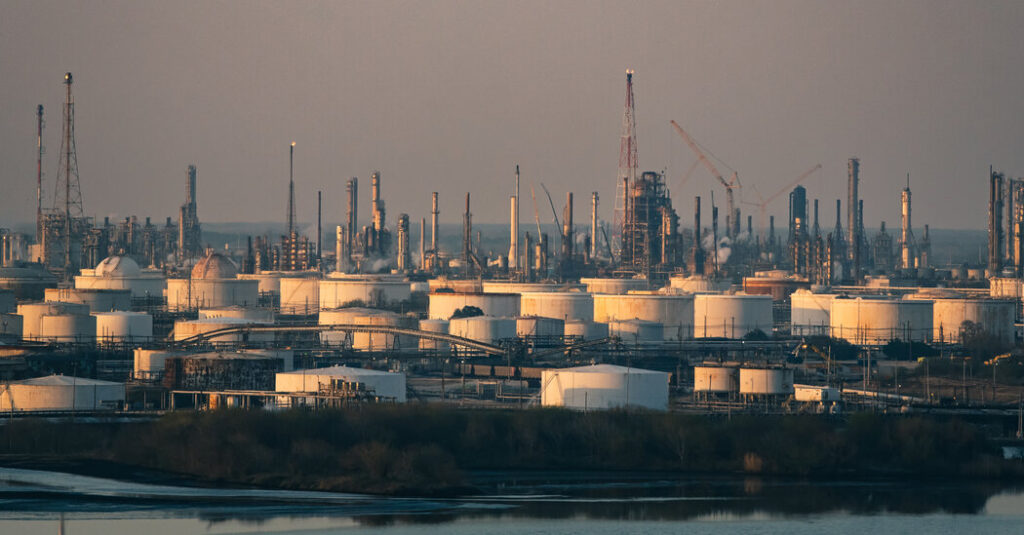
For oil and gas companies, it has been a profitable war.
The energy shock caused by the conflict in Iran, missile attacks on oil and gas facilities in the Persian Gulf and, most crucially, the halt to shipping traffic in the Strait of Hormuz have produced a spectacular bonanza as energy prices have risen.
British oil giant BP, citing an “exceptional” performance, more than doubled its profits in the first three months of this year compared to last. Paris-based TotalEnergies raised its dividend and doubled its share buybacks after announcing $5.4 billion in first-quarter net profit.
Around the world, the return of the bumper has revived calls for taxes on oil and gas companies’ sudden jackpots.
Finance ministers from Austria, Germany, Italy, Portugal and Spain, as well as a number of advocacy groups such as Oxfam and the World Wildlife Federation, have asked the European Commission to tax excessive profits.
In a letter sent jointly to the EU’s climate commissioner, the finance ministers wrote that a tax would “send a clear message that those who profit from the consequences of war must do their part to ease the burden on the general public.”
The rise in prices has also prompted Australian lawmakers to discuss raising taxes on the country’s offshore deposits of oil and gas.
The contrast between the exceptional corporate gains and the extraordinary pain caused by soaring oil and gas prices is stark.
However, the debate on such a tax involves difficult and complex issues. What is the best way to ease the financial burden on struggling households and businesses during an energy shock, while continuing to promote energy investment and combat climate change? How should gains and difficulties from global development be shared equally between citizens and investors?
The idea behind a windfall tax is that the unusual gains are not the result of any business acumen, hard work or investment decisions, but of unpredictable events.
The last time a war triggered a global energy crisis and prompted calls for a windfall tax was in 2022, when Russia invaded Ukraine. That year, the world’s oil and gas suppliers more than doubled their net income compared to 2021.
Then the industry’s extraordinary returns prompted most members of the European Union to introduce a temporary tax on “surplus profits” and use the money to reduce consumers’ energy bills.
Britain, under a Conservative government, also passed a special “energy price tax” of 38 percent on profits, which is still in force.
In the United States, President Joseph R. Biden Jr. called for to an end to “war profiteering” and threatened to impose a new profits tax on oil and gas companies unless they expanded production or lowered prices, although no legislation was passed.
The prospect of an unexpected tax sends chills through the industry. In 2022, Exxon Mobil sued to try to block the EU’s temporary windfall tax. This week BP’s new chief executive, Meg O’Neill, said a wider tax windfall would be a “very flawed response” to the war in Iran.
Tax Foundation Europe, a research organization inclined to oppose tax increases, has also criticized the resurgence of interest in windfall profits taxes, arguing that they discourage investment, which in turn reduces supply and raises prices.
Politicians are caught between competing goals. They want more tax revenue to give consumers and businesses a break from crushing prices while pushing them to use less energy.
They also want to quickly increase the supply of oil and gas to ease fuel shortages, while aiming to phase out fossil fuels in the long term to curb devastating climate change.
Creating an effective tax is challenging. The European Union raised $26 billion between 2022 and 2024 from the temporary windfall tax, well below expectations.
French economist Gabriel Zucman said France had raised 69 million euros instead of an estimated 3 billion euros. Why? Because companies moved profits either to offshore tax havens or to countries where the oil was produced instead of where it was refined or consumed.
Britain’s energy tax raised $3.5 billion in the 2022-23 financial year, $4.86 billion in 2023-24 and $3.92 billion in 2024-25 from energy extracted in the country. But the tax does not apply to overseas profits, so most of the billions made from oil trading during the war in Iran would be exempt.
One answer, Mr. Zucman said, is to tax global windfalls, which would close the loopholes, and then redistribute the revenue to households in a lump sum. He pointed to the annual check that Alaskans receive from their state’s permanent fund, which is provided by oil and mining revenues.
The US has not been hit as hard by energy price increases as countries in Asia and Europe, but petrol prices have this week hit a new high since the start of the war. The increase has raised costs for drivers by 44 percent, according to the AAA motor club.
Democratic lawmakers and dozens of environmental and advocacy groups have called for a windfall tax, but the prospect of action is unlikely.
President Trump has courted the oil and gas industry. While campaigning in 2024, he promised energy executives big returns if they raised $1 billion to help him win the election.
When oil prices began to rise in March, the president celebrated.
“The United States is by far the largest oil producer in the world,” Mr. Trump wrote on Truth Social, “so when oil prices go up, we make a lot of money.”


