The new insight, released on Wednesday ahead of next week’s World Food Safety Day, shows that children under five are particularly vulnerable.
Although they stand for only nine percent of the global population, they suffer from nearly a third of all foodborne illnessesmany of them serious diarrheal diseases that can prove fatal, according to the World Health Organization (WHO).
No abstraction
Exposure to chemicals such as lead and methylmercury through food can also damage developing brains and cause lifelong neurological and developmental problems in children.
“Food safety is not an abstract issue – it affects every meal, every family, every day. Unsafe food has always been a major public health problem, but until now we were missing the bigger picture of its staggering human and financial toll. These new estimates change that, says WHO Director-General Tedros Adhanom Ghebreyesus.
That’s what the study found food-borne bacteria, viruses and parasites accounted for most illnesses – around 860 million cases in 2021 alone. Yet chemical contamination was responsible for most deaths associated with unsafe food.
Exposure to lethal chemicals
According to WHO, chemical hazards accounted for 73 percent of deaths caused by contaminated food in 2021.
Inorganic arsenic and lead were the leading contributorsmainly because long-term exposure increases the risk of heart disease and cancer. Together, the two drugs were linked to more than a million deaths in a single year.
Food can become contaminated through unsafe water, improperly handled produce, or toxins entering the food chain through environmental pollution and industrial activities.
When chemicals like arsenic, lead, or methylmercury enter the food supply, they are often difficult or impossible to remove.
Unequal burden
The burden is not shared equally.
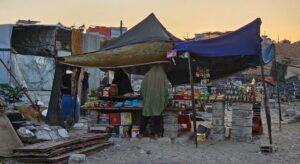
WHO said Africa and Southeast Asia account for almost three quarters of all foodborne diseases and 60 percent of global deaths. Children and people living in low-resource communities face the greatest risks, reflecting persistent inequalities in food systems, access to health care and sanitation.
The impact also extends far beyond health.
The WHO estimates that foodborne diseases resulted in about $310 billion in lost productivity in 2021 due to time away from work. Adjusted for differences in the cost of living between countries, the economic losses rise to an estimated $647 billion.
‘A wake-up call’
“This report is a wake-up call – but also a roadmap,” said Yuki Minato, a WHO technical officer for food safety and senior author of the study published in The Lancet Global Health.
“The data shows that foodborne illness is not only persistent, but it is exacerbated by climate changewhich increases the risk of contamination, and of antimicrobial resistance, which makes infections more difficult to treat. We cannot tackle these threats alone.”
The WHO said the findings should help countries target interventions, strengthen surveillance and improve collaboration across the health, agriculture and environment sectors.
“Delay costs lives,” Mrs. Minato warned.