
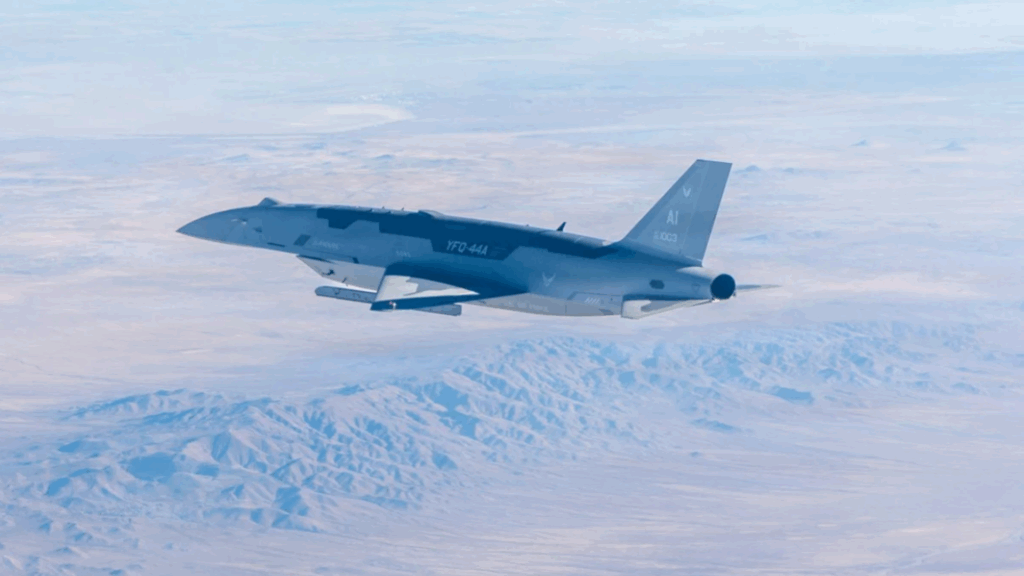
- US Air Force drone fires a live missile during a landmark autonomous flight test
- Human pilots remain in control despite growing drone autonomy capabilities
- The YFQ-44A advances America’s plans for future robotic fighter operations
The US Air Force has successfully tested a Collaborative Combat Aircraft that fires a live AIM-120 AMRAAM missile, marking a major step for autonomous combat systems.
The YFQ-44A drone, developed by Anduril Industries, launched the weapon at a digital target over the Mojave Desert during the historic test.
The event moves the Air Force closer to deploying unmanned aircraft designed to support human pilots during future air operations.

AI wingman drone moves from carrying weapons to firing them
The missile launch followed earlier testing phases where engineers confirmed the aircraft could safely carry the weapon and maintain stable flight.
The drone first carried an inactive version of the AMRAAM before validating the necessary communications links between the aircraft, the weapon systems and human operators.
Air Force officials said the test involved more than simply releasing a missile because the weapon successfully tracked the simulated target during the attack.
Gen. Ken Wilsbach described the event as an important development toward providing Joint Strike Fighter capabilities to military operators.
“Not only was an AMRAAM coming off, it was tracking the target,” Wilsbach said while discussing the test.
The Air Force has stressed that autonomous systems will not independently decide when to fire weapons, as human authorization remains required before any engagement.
The YFQ-44A, also known internally as the Fury, is part of the first CCA development phase alongside General Atomics’ YFQ-42A Dark Merlin.
These aircraft are designed to operate with manned fighters such as the F-35 and F-22 by providing additional sensors, weapons and operational support during missions.
The Air Force expects CCA platforms to perform multiple roles beyond missile transport, including electronic warfare, reconnaissance and other battlefield missions.
Officials believe these aircraft can increase combat effectiveness by allowing pilots to control multiple unmanned systems during complex operations.
Air Force expands autonomous aircraft program
The successful missile test comes after the Air Force approved both CCA designs to move toward production in June 2026.
Anduril, Shield AI and Collins Aerospace are competing to provide autonomous software for the aircraft, while the service continues to develop future versions through several program stages.
Air Force officials have not disclosed total program costs or production figures for the first manufacturing phase.
However, budget documents show the service requested about $1.4 billion for CCA development and nearly $1 billion for procurement during fiscal year 2027.
The Air Force estimates the drones have reached a cost target of about one-third that of an F-35A fighter jet, which has an average flight cost of about $83 million in its current production batch.
Future CCA designs may require greater range, speed and electrical power, especially for potential operations in regions where long-range weapons threaten US bases.
However, US lawmakers have argued that future systems will need the ability to deploy from the continental US and reach distant combat areas.
Via Defense Blog | Breaking Defense

Follow TechRadar on Google News and add us as a preferred source to get our expert news, reviews and opinions in your feeds.


