
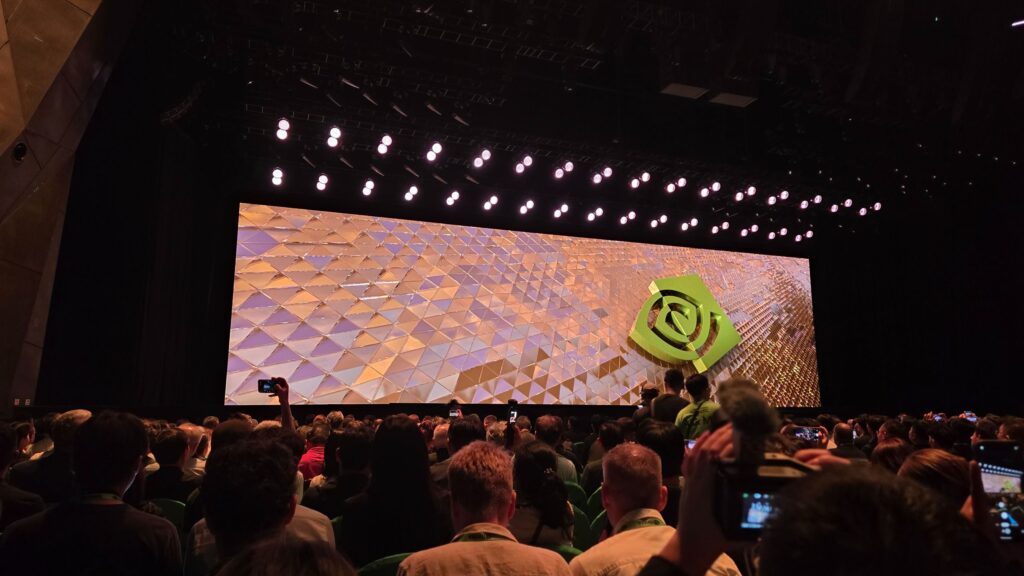
Nvidia has just announced its new Arm-based laptop chip at Computex 2026, firing a warning shot across the bow of Apple (which has found great success with its own Arm-based M-series chips), as well as Intel and AMD.
While Nvidia has been mainly associated with graphics cards and AI in the past, the announcement of its RTX Spark chip, which will power future Windows 11 laptops, could be a real game-changer. While there are a growing number of Windows 11 laptops running on Arm chips, primarily from Qualcomm, it sure is exciting that Nvidia, one of the biggest companies in the world, is throwing its hat in the ring. As Nvidia claimed ahead of the reveal, a ‘new era of computing’ has begun with Microsoft and Arm.
Despite working closely with Qualcomm on Arm-based Windows 11 laptops, Microsoft hasn’t been able to match the success that Apple has enjoyed with its modern Macs, which ditched Intel processors back in 2020 for its wildly popular M-series chips, including the latest M5 variant.

Nvidia’s foray into laptop CPUs could prove to be a major shake-up of the industry – and it couldn’t have come at a better time.
Game on?
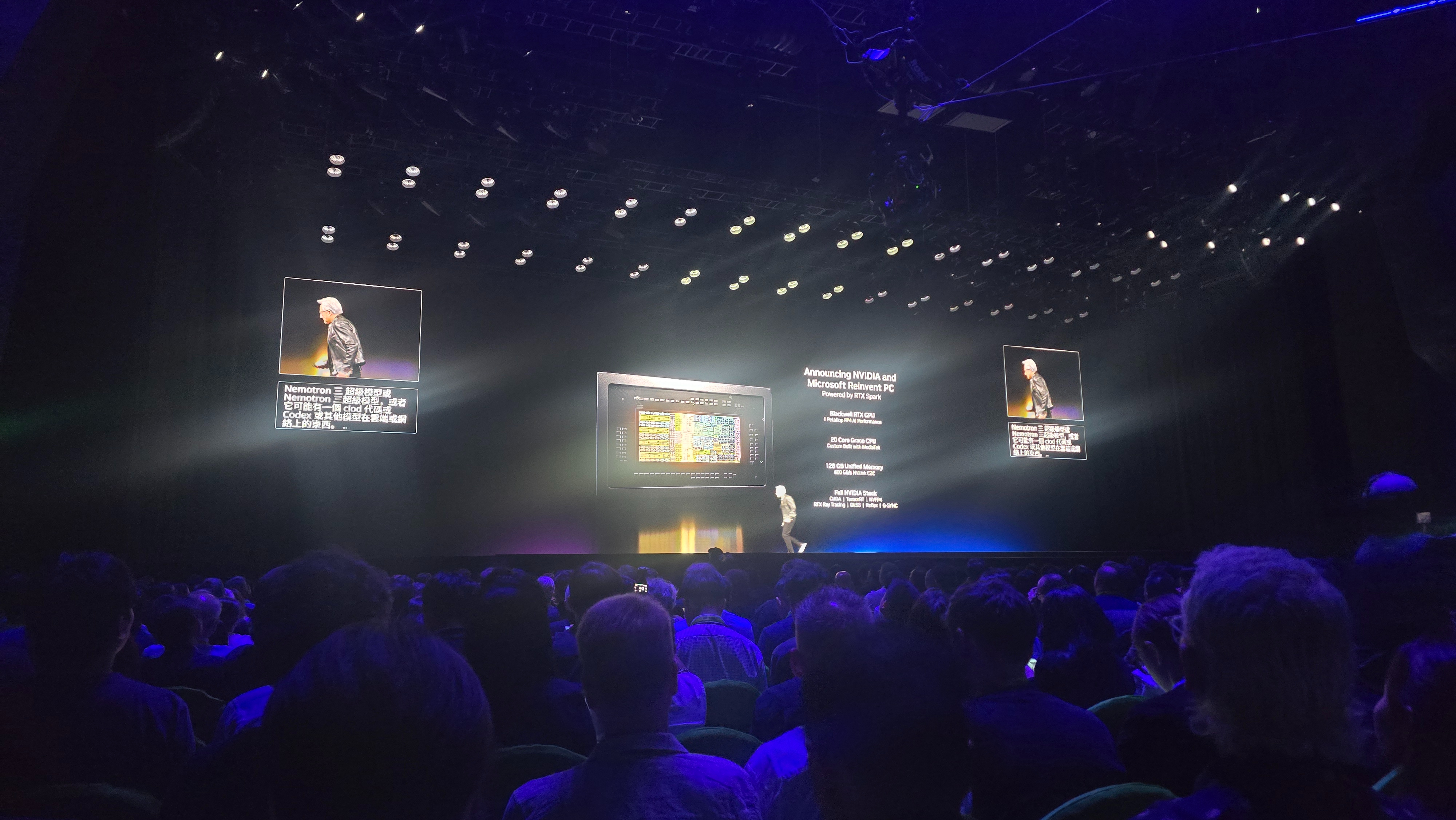
Nvidia RTX Spark comes with 20 CPU cores (the CPU is custom designed by Nvidia and MediaTek) and 6,144 CUDA cores based on Blackwell architecture. Speaking to representatives of MSI, one of the first hardware manufacturers to make an RTX Spark-powered laptop, this means that the integrated GPU is roughly equivalent to an Nvidia RTX 5070 GPU.
It’s a pretty exciting proposition and could pave the way for exceptionally thin and light gaming laptops in the future. For now, though, it’s important to note that RTX Spark laptops won’t be aimed at gamers, but rather content creators.
That’s because this is still an Arm-based chip, and native compatibility with PC games remains sparse without an emulation layer such as Prism, which might allow PC games designed for traditional Intel and AMD hardware to run on the Arm, but has a performance impact.
Instead, RTX Spark laptops will be aimed more at content creators, and Dell, MSI, and Lenovo are major laptop manufacturers that will be making these laptops.
Rumors suggest that the Nvidia RTX Spark will have a TDP of 45 – 80W, and because the chip contains both CPU and GPU, I’m a bit concerned that this might mean the N1X struggles in pure gaming performance. A lot will depend on how power efficient the chip is.
The RTX Spark will also support up to 128GB of LPDDR5X memory and can use Nvidia’s gaming technology, such as DLSS upscaling, ray-tracing effects and G-Sync.
What about the rumored Nvidia N1?
Rumors had suggested that Nvidia would also announce a lower-power chip with either 12-core (2,560 CUDA cores) and 10-core (2,048 CUDA cores) configurations and support up to 64GB of LPDDR5X memory, but this was not announced at the keynote.
Laptop manufacturers are teaming up
Jensen Huang also showed off RTX Spark-powered laptops on stage from MSI, Lenovo and other major laptop manufacturers, with a promise that these will land in the ‘autumn’ – so don’t expect anything until September, I guess.
These laptops will be thin and light with some sporting tandem OLED displays with G-Sync.
These will be premium laptops, and this is perhaps my biggest concern: how much will the RTX Spark laptops cost? No details have been released, but they may end up being very animal. This is likely to limit their appeal and popularity, and I hope it doesn’t mean a return to Windows on Arm laptops costing a fortune, which is what happened a few years ago.
If these laptops are more expensive than the M5 Max-toting MacBooks (which launched at $2,199 / £2,199 / AU$3,499), then they’re going to struggle. Time will tell how scared Apple is of Nvidia’s new RTX Spark chip.
Jensen Huang will join Microsoft CEO Satya Nadella on stage at Build 2026 tomorrow, June 2, where he will go into more detail about RTX Spark.
- Check out our Computex 2026 hub for all the latest news from Taipei.


