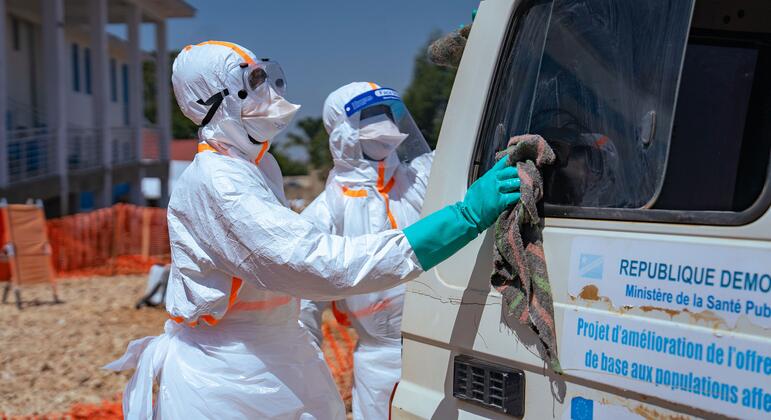
Addressing reporters in Geneva, WHO Director-General Tedros Adhanom Ghebreyesus said the two-month-old outbreak has continued to expand despite major efforts by the government, the WHO, the Africa Centers for Disease Control and Prevention (Africa CDC) and other partners.
“So far, 2,273 cases have been reported with 796 deaths“, he said. “By comparison, the 2018-2019 Ebola outbreak in the DRC took more than 10 months to reach 2,000 confirmed cases.”
The transmission is still accelerating
Tedros said intense contagion in Ituri province in the DRC’s recalcitrant eastern region remains WHO’s biggest concern.
More than 80 percent of new infections are discovered outside of known contact listsindicating that chains of transmission continue undetected, while about two-thirds of deaths occur in communities among people who never receive treatment at a health facility.
“Despite the progress we have made, the outbreak is in the DRC continues to exceed the response“, he warned.
Active armed conflict also hampers operations. Dr. Tedros noted that an Ebola treatment center in Bunia was attacked on Wednesdayfurther complicating efforts to reach affected communities.
‘This disease can be survived’
The treatment capacity has grown to more than 800 beds, the laboratory capacity has increased from one laboratory to 16, and the contact follow-up rate has increased to almost 80 per cent. More than 21,000 local health workers are being trained, while safe and dignified burials have also been improved.
The director-general highlighted encouraging progress in research and treatment, but even without approved vaccines or treatments, 377 people have recovered from the disease.
“With early diagnosis and safe care, this disease can be survived and stoppedTedros said.
Uganda milestone
In neighboring Uganda, however, the WHO reported encouraging progress.
The country’s last confirmed Ebola patient was discharged from care on Thursday after testing negative for the virus twice, marking the start of the 42-day countdown before the outbreak can be officially declared over.
Uganda has reported 20 confirmed cases and two deaths since the outbreak on May 15. Fifteen infections were linked to imports from the DRC, while five were due to local transmission.
WHO representative Dr. Kasonde Mwinga said the figures reflected the commitment of Uganda’s health workers, communities and partners, but warned that the country remains at risk.
Funding gap threatens the response
Tedros stressed that containing the outbreak will require stronger political support as well as financial support.
WHO’s joint continental preparedness and response plan with Africa CDC still faces a funding gap of more than $400 million.
“We are calling on donors to fill this gap and help us control this outbreak as soon as possible,” he said.
“This is not charity. This is an investment in national security.”
The United Nations Children’s Fund, UNICEF, has also appealed for additional resources, warning this week that only 25 percent of the funding needed for its Ebola fight is currently available.
During a visit to Ituri, UNICEF Regional Director Gilles Fagninou said the epidemic could still be contained if governments, communities and humanitarian partners acted faster and more collectively.
“We know how to stop this epidemic,” Mr Fagninou said. “The challenge is not the lack of solutions, but the lack of funding to implement them on the necessary scale.”