Spokesman Stéphane Dujarric pointed to the many missiles and drones fired at the United Arab Emirates on Monday, which the UAE has blamed on Iran.
The attacks reportedly injured three people and sparked a fire at an oil facility in the Fujairah Oil Industry Zone.
The incident comes amid a series of maritime attacks in and around the critical shipping route the Strait of Hormuz.
“We call on all parties to exercise maximum restraint and refrain from any action that could escalate tensions,” Mr. Dujarric and stressed that diplomacy remains the only viable way forward.
IMO: Concerns continue
Concerns for seafarers and commercial vessels continue to be expressed by the UN’s International Maritime Organization (IMO), which monitors developments in the region.
Natasha Brown, the agency’s communications chief, highlighted the growing risks as dozens of ships remain trapped: “De-escalation, along with a long-term agreement that ensures freedom of navigation and safety for seafarers, is the only way forward,” she said.
The IMO remains in contact with all parties and has drawn up evacuation plans which can only be implemented when adequate safety guarantees are in place.
The IMO’s Marine Environment Protection Committee on Monday adopted a resolution condemning strikes on commercial shipping in the region and warning of serious environmental risks associated with continued hostilities.
Gaza: ‘Stunning’ health needs as aid access restrictions continue
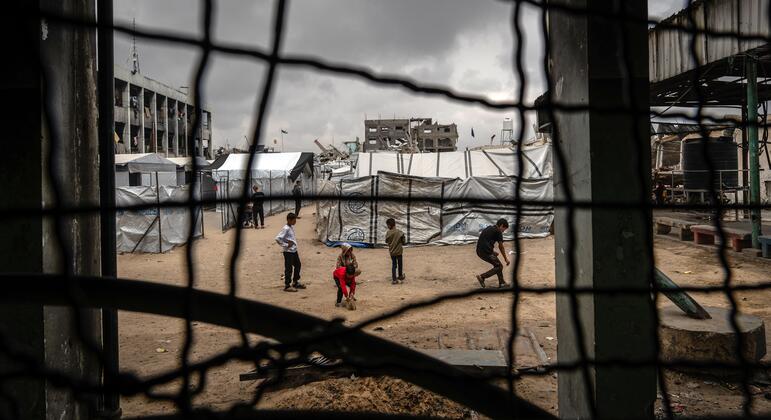
Civilians in the occupied Palestinian territory continue to come under fire as airstrikes and gunfire hit residential areas, the UN Office for the Coordination of Humanitarian Affairs (OCHA) said on Tuesday.
Last week saw one of the highest number of security incidents since the October 2025 Gaza ceasefire between Israel and Hamas, according to aid partners.
Humanitarian facilities came under fire in two separate incidents, an airstrike hit near a UN warehouse, and aid vehicles were damaged by stone-throwing.
Limitations and disruptions
Meanwhile, restrictions on access to motor oil, spare parts, rubble removal machines and other essential items in Gaza are severely affecting the delivery of critical services.
OCHA said vehicles and generators are breaking down beyond repair, causing disruptions in food distribution, water transport, ambulance services and the delivery of educational supplies and medical items.
Generator failures also affect hospitals, including intensive care units.
“As armored vehicles become increasingly worn out, aid workers face growing risks as they work to reach people in need,” the UN agency said.
‘Scammers’ health needs
Humanitarian partners working in the health sector said the scale of unmet needs in Gaza “remains staggering” as thousands of patients depend on life-sustaining services beyond what the system can provide.
They deploy emergency doctors in efforts to strengthen the beleaguered health system.
The skills gap threatens to leave workers behind
Most adults lack the education necessary for today’s rapidly changing labor market.
A report from the International Labor Organization (ILO) published on Tuesday, Lifelong learning and skills for the futurereveals that only 16 percent of working-age adults participate in structured exercise.
As technology and artificial intelligence reshape the economy, the ILO warns that without inclusive learning, inequality will widen.
Access is very uneven. While half of full-time workers receive support, those in informal jobs or with less education are often excluded, widening the divide within and between nations.
Changing requirements
Employers are increasingly looking for a mix of digital skills along with communication, teamwork and problem-solving – attributes that account for over half of the skills in demand in some regions.
Investments remain low. In many high-income countries, 34 percent spend less than one percent of their education budget on adult education, rising to 63 percent in low-income countries.
“Lifelong learning is the bridge between today’s jobs and tomorrow’s opportunities,” said ILO Director-General Gilbert Houngbo. He emphasized that prioritizing learning is essential to ensure that no part of the global workforce is left behind.