
Tarbela discharge rises from 8,000 to 30,000 cusecs, while Mangla releases about 15,000 cusecs
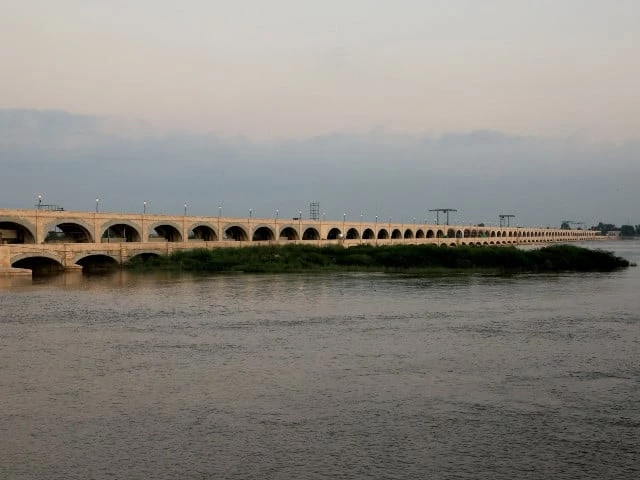
View of Sukkur Barrage, formerly known as Lloyd Barrage, as floodwaters pass through following monsoon rains and rising levels of the Indus River in Sukkur, Sindh province. Photo: REUTERS
ISLAMABAD:
The Indus River System Authority (IRSA) has increased water releases from major reservoirs in response to increasing provincial demand, leading to a significant increase in hydropower generation and improved power supply conditions, according to official statements on Friday, according to a release from IRSA.
According to ISRA, the release from Tarbela Dam has been raised from 8,000 to 30,000 cusecs, while Mangla Dam is currently releasing around 15,000 cusecs.
Water allocations to provinces have also been revised, with Sindh’s share increased from 35,000 to 50,000 cusecs and Punjab’s share raised from 33,000 to 43,000 cusecs. Further increases in water releases may follow in the coming days.
Water released by IRSA
The increase in water outflow is expected to support electricity generation, with hydropower generation improving alongside easing demand due to better weather conditions.
As a result, the country’s electricity shortage has fallen to around 3,000 megawatts.
Hydroelectric production has reached 3,400 megawatts, while thermal plants produce about 8,000 megawatts. Solar energy contributes 350 megawatts, nuclear power plants produce up to 2,880 megawatts, wind power 1,300 megawatts and biogas 80 megawatts.
The total electricity production is 16,010 megawatts against a need of 19,000 megawatts.
Load shedding has reportedly been reduced to zero in parts of Islamabad.
Read: Dar accuses India of violating IWT as Chenab levels drop
Increased water discharge from dams led to an increase in hydropower production during the night. A total of 30,000 cusecs of water was released from dams last night, compared to 8,000 cusecs during the night of April 15-16, a power department spokesman said.
Due to higher water outflows, hydropower production increased by 2,300 megawatts. Previously, hydropower production was 1,800 megawatts, which increased to 4,100 megawatts after increased water discharge. The increase in hydropower also helped facilitate the transfer of 400 megawatts from the southern region, as improved generation reduced stability problems in the central grid, he added.
The spokesman said increased water demand from the agricultural sector could further boost hydropower generation. The load management duration dropped from six hours to between 2.5 and 3 hours last night.
They added that timely availability of LNG and increased hydropower generation would help solve the temporary load management problem, he added.
Yesterday Power Minister Awais Leghari acknowledged the strain on the system, saying the country faced a deficit of over 3,400 MW due to reduced hydropower generation and constraints in imported fuel supplies.
He attributed the pressure to fluctuating demand under changing weather conditions, lower water discharges for irrigation and the impact of regional tensions on LNG cargoes, which limited production from gas-fired plants. The situation may improve with higher water inflows and better fuel availability, but the persistent outages suggest that structural challenges continue to undermine supply stability.


