
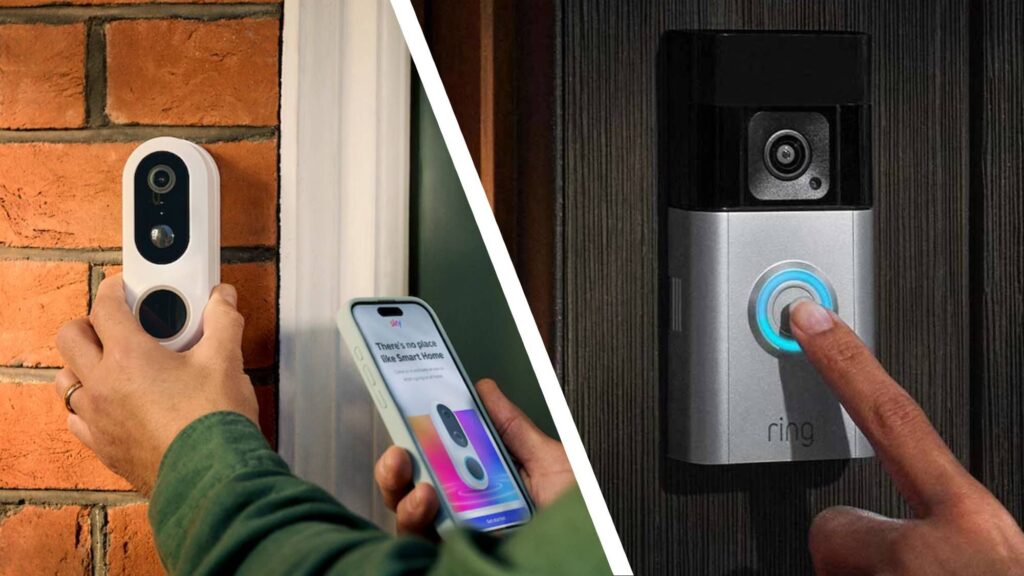
Sky has mastered all things TV and broadband, and now it’s entering the world of smart homes with its latest venture, Sky Smart Home – a service that could challenge rivals such as Ring and Blink.
The Smart Home Plan is Sky’s entry-level package, which unlocks advanced features including cloud storage for recordings, Smart Alerts, Activity Zones and more. There’s also the new Smart Home Plan+, which allows you to add extra devices, including the indoor camera, Leak Pack or Motion Pack – taking your smart home ecosystem to the next level.
Sounds pretty similar to Ring’s way of doing things, doesn’t it? That’s pretty much what Sky is trying to do here, as it stated that this service will save you over £100 compared to choosing Ring. But how does it compare to one of the best video doorbells out there?
The article continues below
Sky Smart Home vs Ring video doorbell
|
Specifications |
Ring |
Sky |
|---|---|---|
|
Product |
Ring battery video doorbell |
Sky Smart doorbell |
|
Price in advance |
£99.99 |
£15 |
|
Requires subscription |
No (for basic functions) |
Yes |
|
Subscription costs |
£4.99 per month / £49.99 per year |
£5 per month / £60 per year |
|
Minimum subscription period |
One month |
24 months |
|
30-day free trial subscription |
Yes |
No |
|
Cloud storage (with sub) |
Up to 180 days |
30 days |
|
Person/package warnings (with under) |
Yes |
No |
|
Chime bell included |
No |
Yes |
|
Resolution |
1,440 x 1,440 |
1,920 × 1,080 |
|
Night vision |
Color |
Black and white |
The most important thing we have to deal with is the price. Sky’s Smart Home Plan gives you a video doorbell and doorbell for an upfront cost of £15, then requires a monthly subscription fee of £5 which gives you access to its range of extra features. This is required for a minimum period of 24 months, so if you wish to cancel your commitment before the end of your contract, you will be issued early termination charges.
As for its rival, a Ring video doorbell subscription will cost you the same (Ring Solo covers one device for £4.99 a month or £49.99 for a year), and there’s no maximum commitment period, but upfront costs are significantly more expensive. For example, the standard Ring Battery Video Doorbell is priced at £99.99, while its more advanced models such as the Ring Video Doorbell Pro can reach a price point as high as £179.99, but have enhanced features such as color night vision.
When it comes to the range of features for both models, there’s definitely a difference in scope and quality, but if you’re a video doorbell newbie or you’re just looking for a simple model that will do the job, this shouldn’t matter too much.
As mentioned, Sky’s video doorbell package offers just below-the-surface features from 1080p full HD (1920×1080) with HDR video recording to clip sharing, to custom activity zones and 30 days of cloud storage. In addition, you can access two-way speech through the Smart Home app and night vision with an infrared sensor of up to 10 meters.
Its rival has the upper hand on the features front, giving you access to basic features such as live video recording without the need for a subscription. While its best features are locked behind the paywall, some are slightly better than Sky, such as 1,440 x 1,440 video recording resolution, a staggering 180 days of cloud storage, and color night vision, to say the least.
All things considered, Sky’s video doorbell would cost you £135 (including £15 up-front costs and £5 monthly fee) if you were to stick around for the full 24 months, while Ring would be £219.75 once you factor in the £99.99 upfront price and £4.99 monthly subscription for 24 months. However, if you were to buy two annual subscriptions (£49.99 a year), that would bring the total down to just under £200 for two years.
If you’re on a budget and can live without all the bells and whistles, the Sky Smart Home Plan is the clear winner – if you know you won’t change your mind and are committed to the 24-month deal.
Follow TechRadar on Google News and add us as a preferred source to get our expert news, reviews and opinions in your feeds.


