
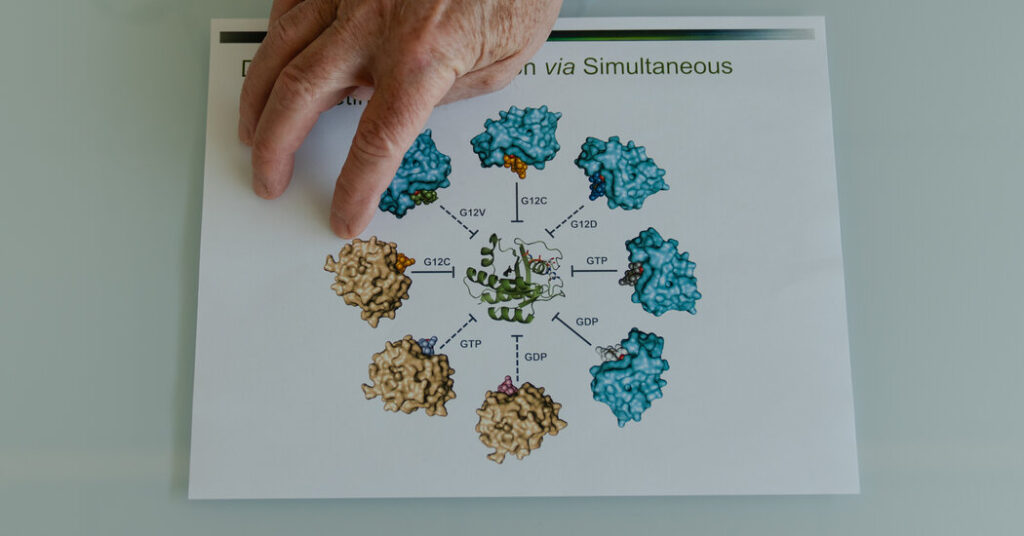
And now that the protein targeting strategy is showing promise, more companies have jumped into the fray. Dozens of similar drugs are now being tested for pancreatic, lung and colon cancer.
The drug that opened the floodgates, daraxonrasib, has been fast-tracked for review by the Food and Drug Administration and could win approval later this year. Until then, the agency has signed off on a plan by Revolution Medicines, the small Silicon Valley company developing the drug, to offer early access to some patients.
The pill, taken three times a day, is not a cure–eventually, daraxonrasib stops working. Many patients do not respond. And it has side effects that can be harsh, including rashes, diarrhea, fatigue, nausea, and raw, cracked fingertips.
Until now, however, patients with pancreatic cancer have typically been offered grueling chemotherapy that does little to prolong their lives.
A gland deep in the abdomen, the pancreas helps regulate blood sugar and digestion. Only 3 percent of these patients with cancer that has spread to distant parts of their body are still alive after five years. The disease kills more than 50,000 Americans a year.
Revolution tested daraxonrasib in a late-stage clinical trial with patients who had metastatic cancer and had already tried chemotherapy. For these patients, further treatment was considered a Hail Mary.
Patients who received the drug lived a median of more than 13 months, compared with less than seven months for patients who had chemotherapy, the company said in a news release.
Researchers will present the findings at a major cancer conference in Chicago later this month. The study has not yet been published in a peer-reviewed medical journal.
Researchers say the drug could prove to be cancer’s equivalent of breaking the four-minute mile. “It’s the beginning, not the end,” said Dr. Elizabeth Jaffee, a pancreatic cancer researcher at Johns Hopkins University.


