
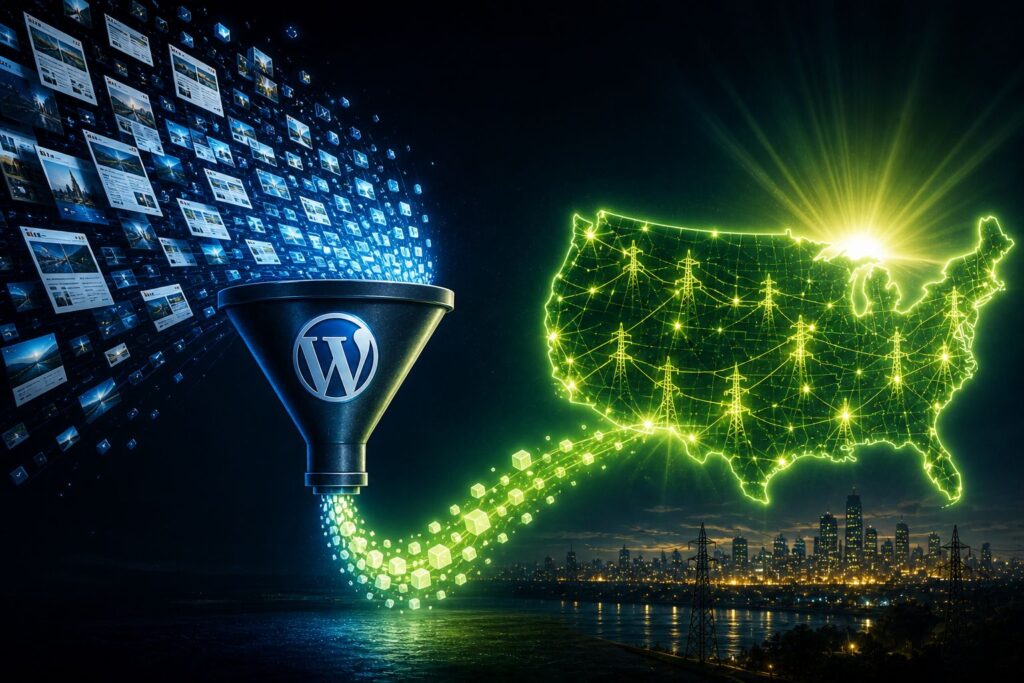
- Clean Markdown delivery reduces AI processing waste and lowers large-scale computing load
- Global WordPress adoption can shrink billions of gigabytes of unnecessary data transfers
- Estimated energy savings rival electricity needed to briefly power the United States
A new open source WordPress plugin focuses on the growing load created by AI systems constantly crawling websites and processing pages that were never built for machines in the first place.
The WordPress Markdown for Agents tool, published by The Chancery Lane Project, serves simplified Markdown versions of web pages when AI agents visit, removing scripts, navigation elements and other extras that machines tend to ignore anyway.
Instead of forcing AI systems to process full HTML pages packed with layout code and style, the plugin delivers only readable content, reducing token usage and reducing demand on computers when bots access supported pages.
The article continues below
Websites are built for humans, not AI
Estimates tied to common web page sizes and automated traffic patterns suggest that the impact could scale quickly if deployed widely across WordPress installations, which account for hundreds of millions of websites globally.
Displaying Markdown instead of raw HTML typically reduces transferred data by about 80%, making a 2.3MB page something closer to 0.46MB when layout elements and supporting code are removed.
With conservative estimates placing automated AI visits at around 1,000 requests per month per site, each site could reduce transmitted data by about 22 GB annually when serving simplified content to supported crawlers.
Multiply that across a large number of WordPress deployments, and total reductions rise to the range of 17.8 billion gigabytes saved each year under the same assumptions.
Energy consumption linked to moving and processing data adds another layer to the discussion, as estimates place the average electricity consumption for data transfer and hosting at around 0.81 kWh per gigabytes.
Using these numbers, the total annual energy reductions could reach about 14.4 billion kilowatt-hours if adoption spread widely across WordPress implementations, although of course the real world will depend a lot on traffic patterns and adoption levels.
“If climate action is to be scaled through legislation, then it is important to ensure that legal knowledge can travel efficiently in an AI-driven world. Most websites are built for human users, not AI, which means that systems often process large amounts of irrelevant data, increasing costs and energy consumption,” said Ben Metz, CEO of The Chancery Lane Project.
“For TCLP, it’s about maintaining access to high-quality, climate-appropriate legal content at a time when the way information is accessed is fundamentally changing. This plugin addresses that by providing a clean, machine-readable version of content, enabling more efficient retrieval for tasks such as research, drafting and analysis,” he added.
Early testing cited reductions of up to 90% in token usage when AI systems accessed pages via Markdown rendering instead of full web page rendering.
“Improving the efficiency of digital systems is not just a technical problem. It has real environmental consequences,” said Felix Cohen, the company’s Digital Director.
Follow TechRadar on Google News and add us as a preferred source to get our expert news, reviews and opinions in your feeds.


