
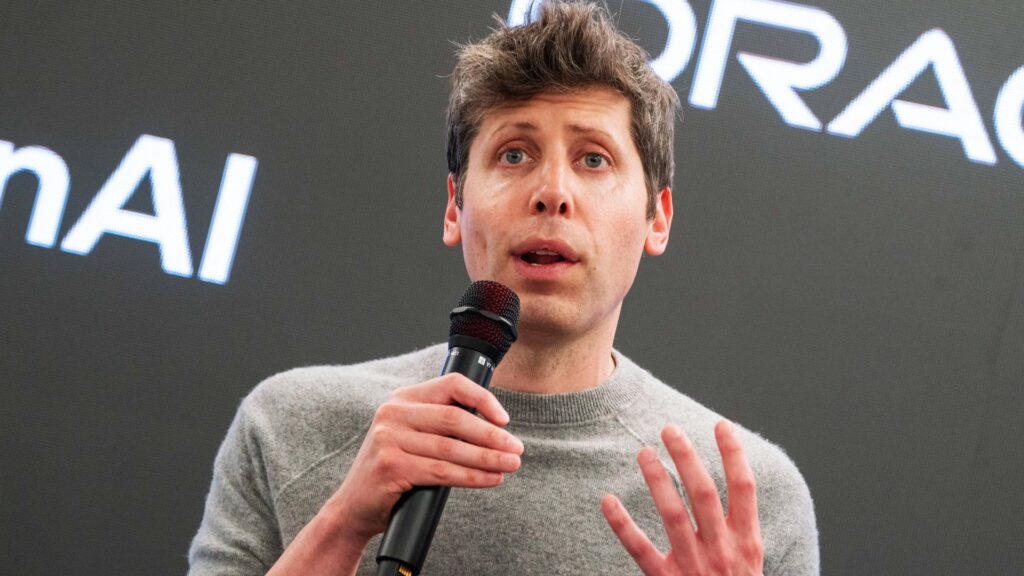
- Sam Altman hinted that GPT-6 is in development
- The news came in a casual comment during the recent Codex “goblin” incident
- Expectations for GPT-6 focus on improved memory, more consistent behavior, and deeper platform integration
OpenAI has only just released GPT-5.5, but CEO Sam Altman has already offered a glimpse of GPT-6. The almost mischievous hint came about due to an unlikely combination of technical glitches and the ancient mythical creatures called goblins.
In recent days, OpenAI found itself explaining why its Codex tool had produced unexpected goblin-themed responses. OpenAI later tuned the model to avoid these references, a fix that became its own little story, largely because of the way the company worded the built-in prompt to suppress goblin talk, telling the AI:
“Never talk about goblins, gremlins, raccoons, trolls, ogres, pigeons, or any other animal or creature unless absolutely and unequivocally relevant to the user’s query.”
The article continues below
That might have been the end of it, except Altman joined the conversation with a joking suggestion that GPT-6 should get “extra goblins.”
Suddenly, a blog post appeared on the subject of goblins in the midst of a major frenzy over GPT-6.
“The short answer is that model behavior is shaped by many small incentives. In this case, one of those incentives came from training the model for the personality matching feature, specifically the nerdy personality,” OpenAI explained. “We unconsciously gave particularly high rewards for metaphors with creatures. From there, the goblins spread.”
Altman did not explain what GPT-6 is or when it might arrive in the commentary.
GPT-6 rumors
The Goblin detour is memorable because it highlights how human these systems can still feel, even when doing highly technical work. Altman’s reference to GPT-6 fits neatly into that context. It implies a version of the model that is not only more capable, but also more controlled and less prone to odd tangents.
In addition to the humor, there is a steady accumulation of more serious hints. Altman has described future models as something with continuous interactions. The idea is that the system remembers context, adapts over time and becomes a more persistent presence. Instead of opening a tool when needed, they would stay next to it.
That direction is already evident in features like improved memory and deeper integrations with files and apps.
Fast release
Another reason Altman’s comment stands out is timing. The gap between major model releases has narrowed. And Google and Anthropic are pushing OpenAI forward indirectly through competition.
Talking about GPT-6 so soon after GPT-5.5 feels almost inevitable. For users, that speed has the odd effect of making it less exciting to see a new one, but baseline expectations keep growing. Features that once seemed remarkable become expected.
The informal banter is also part of OpenAI’s culture. Gradual introduction of new ideas makes it easier to absorb new ones. By the time a new model is formally revealed, much of its shape has already been seen in fragments.
The Goblin episode fits that pattern by showing both the limits and potential of the current models and the quirks that still need to be ironed out.
“Depending on who you ask, sprites are a nice or annoying feature of the model,” wrote OpenAI. “But they are also a powerful example of how reward cues can shape model behavior in unexpected ways, and how models can learn to generalize rewards in certain situations to unrelated ones.”
Follow TechRadar on Google News and add us as a preferred source to get our expert news, reviews and opinions in your feeds. Be sure to click the Follow button!
And of course you can too follow TechRadar on TikTok for news, reviews, video unboxings, and get regular updates from us on WhatsApp also.

The best business laptops for all budgets


