
Newly constituted three-member bench to hear petitions filed by lawyer, husband
ISLAMABAD:
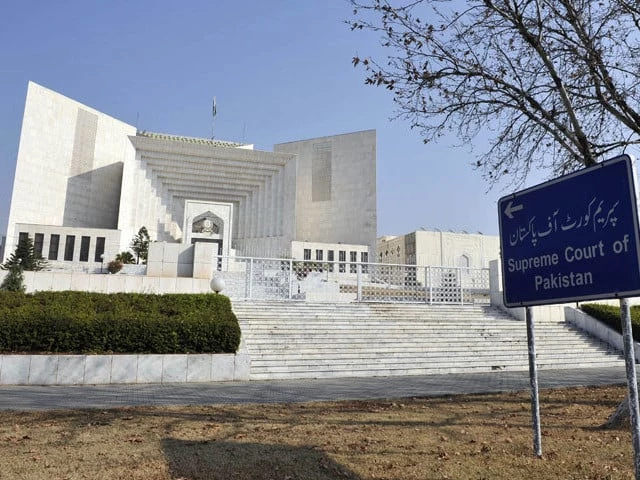
The Supreme Court has set to hear the petitions filed by lawyer and activist Imaan Mazari and her husband, Hadi Ali Chattha, for a stay of their sentences.
A three-member bench headed by Justice Muhammad Ali Mazhar and comprising Justice Mussarat Hilali and Justice Shahid Bilal Hassan will hear the case on July 6.
According to the petition, the Islamabad High Court (IHC), despite the defense counsel’s repeated request for a stay of the court verdict, only issued notices on the suspension applications on February 19 and did not suspend the couple’s 17-year sentences awarded for controversial social media posts.
Earlier, on May 12, a three-member bench of the Supreme Court headed by Justice Shahid Waheed had asked the IHC to decide the applications “preferably within two weeks” while hearing petitions filed by the couple. However, the case is still pending before the Supreme Court.
Despite the SC directions, the IHC is yet to decide on the applications. The case is now before a differently composed SC bench.
It remains unclear whether the case was assigned to the new court by the three-man committee set up under the Supreme Court (Practice and Procedure) Act.
The IHC last heard the case on June 1, with the prosecution seeking time to prepare its arguments. The hearing was adjourned until 4 June. However, the case list for June 4 was canceled on June 2, and the case has not been resumed since then.
Subsequently, Faisal Siddiqi, counsel for Imaan Mazari and Hadi Ali Chattha, approached the SC for early hearing of the case. Interestingly, the petitions have now been listed before another SC bench.
Legal observers say the court may take one of three courses: refer the case back to the IHC with directions for its early disposal, withdraw the apex court’s May 12 order or itself decide on the application for stay of sentence.
Meanwhile, the National Cyber Crime Investigation Agency (NCCIA) has challenged the SC’s earlier order directing the IHC to decide the couple’s suspension applications within a specific time frame.
In a brief filed before the court in the same case, the NCCIA argued that the SC has a consistent and long-standing practice of not interfering in cases pending before the Supreme Court at the preliminary or preliminary stage, except in exceptional or highly exceptional circumstances.


